Litty: Digital Storytelling Platform
I led the design of Litty's reading and publishing experience, connecting story discovery with the tools authors need to reach an audience.
- Mobile App
- UX Research
- Product Strategy
- Storytelling
Project overview
Overview
Reading and publishing multimedia stories
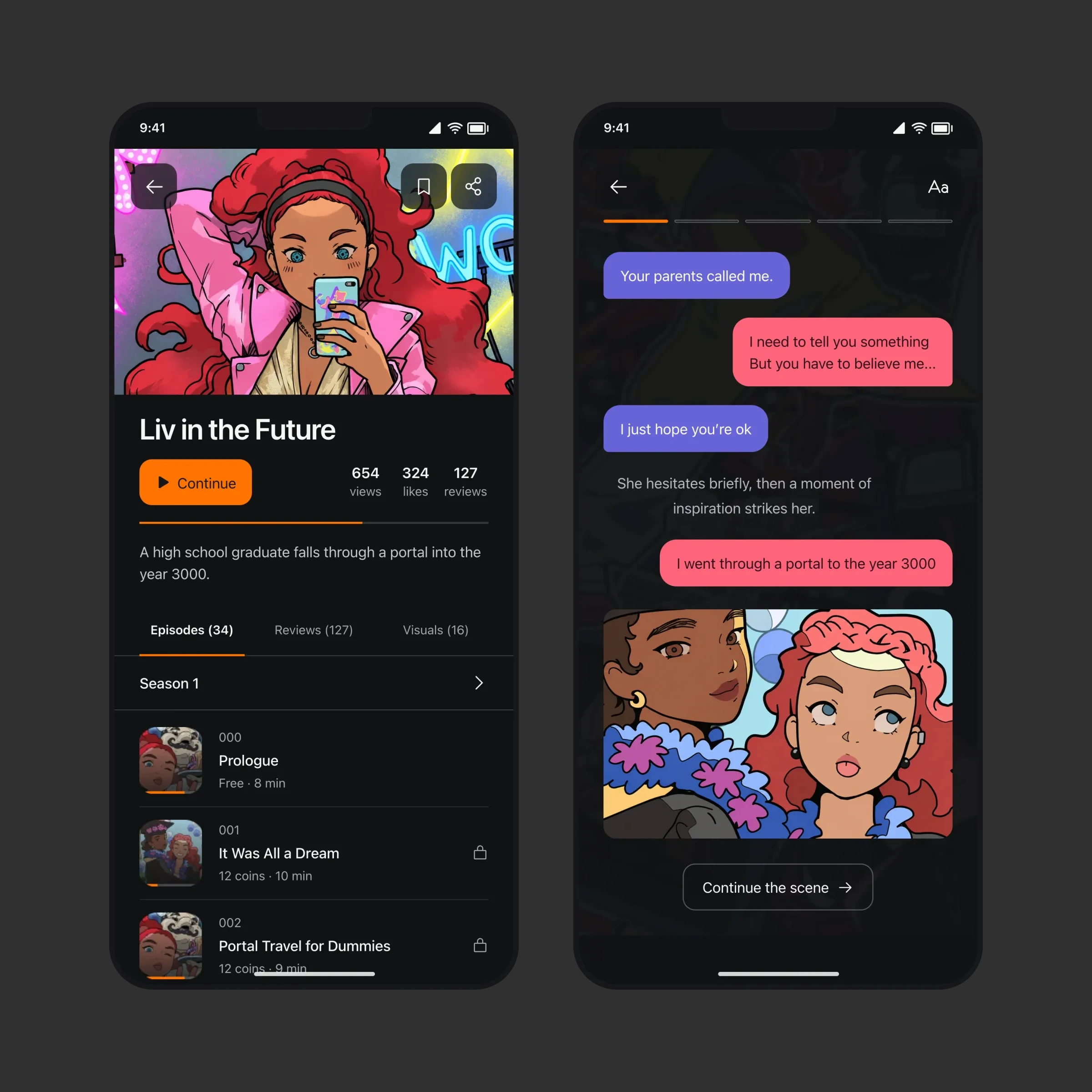
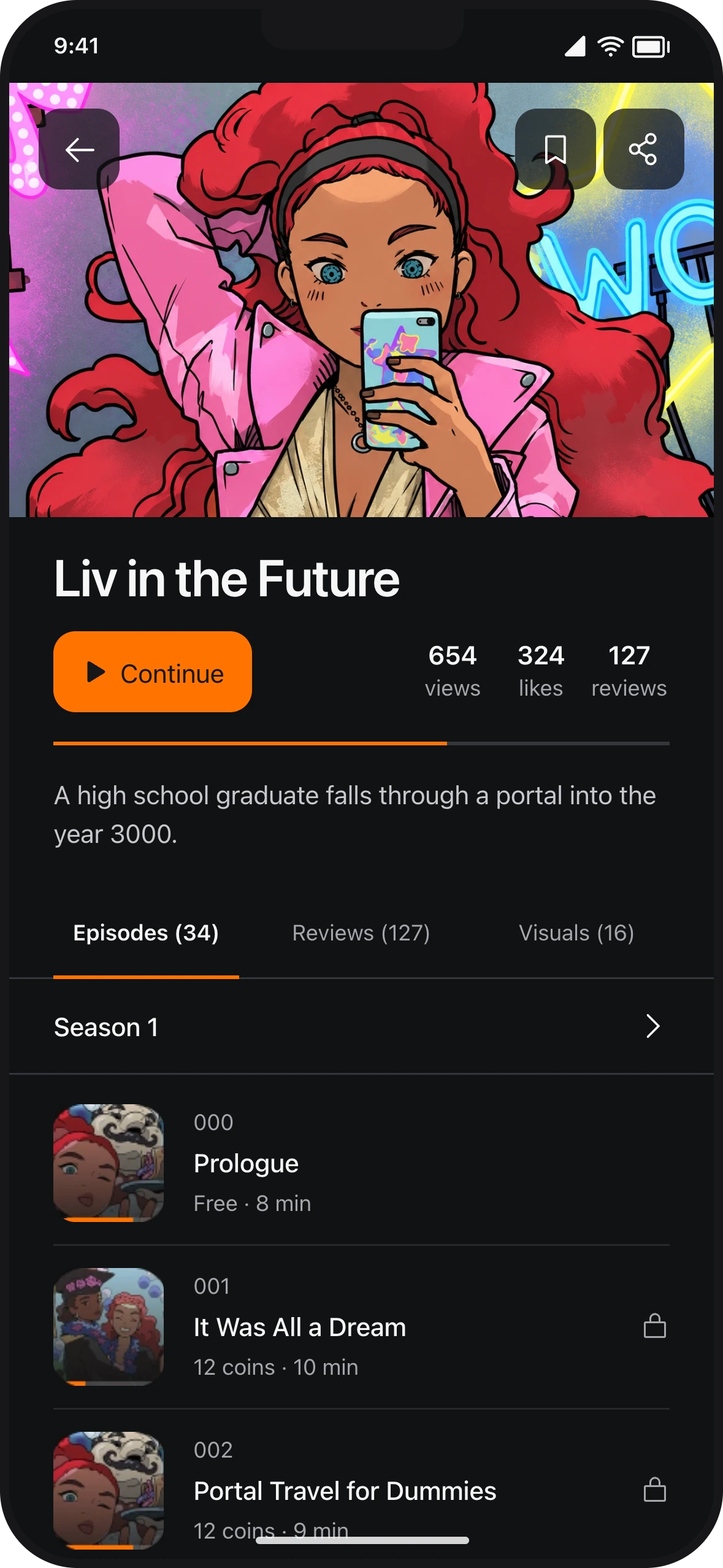
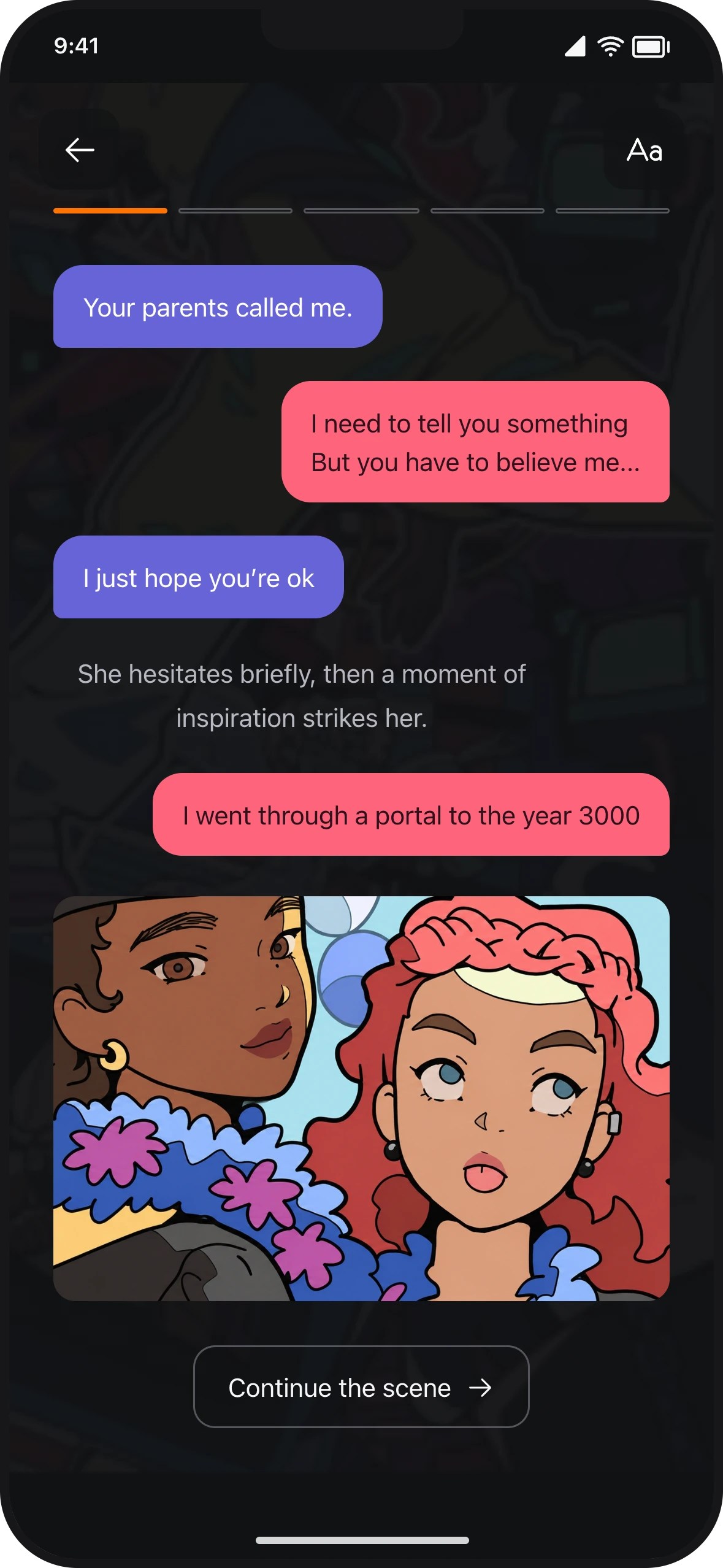
A fiction app with 10-minute episodes, optional audio and motion, and LittyCoins for paid or video-earned access.
Role
Product design and design systems lead
Reader and author apps, the episode model, discovery ranking, the LittyCoins economy, the web and email surfaces, and the shipped design system.
Team: 1 founder/PM, 3 engineers, 1 illustrator; App Store editorial partner at launch
Problem
Stories needed to fit mobile habits
Readers wanted stories that fit a short phone session. Authors needed ways to publish, understand their audience, and earn from individual works.Solution
Short episodes with flexible access
Organize stories into short episodes with optional multimedia. Let readers buy access or earn LittyCoins through optional videos, with payments tied to each work.
“I mostly read on my phone, but it feels too static. I wish the stories could be more interactive, so I felt more engaged.”
Researching readers and authors

Feed study and journey map


Episodes, multimedia and creator payments
Feed ranking and core flows

Reader and author wireframes


From direct unlocks to a coin wallet
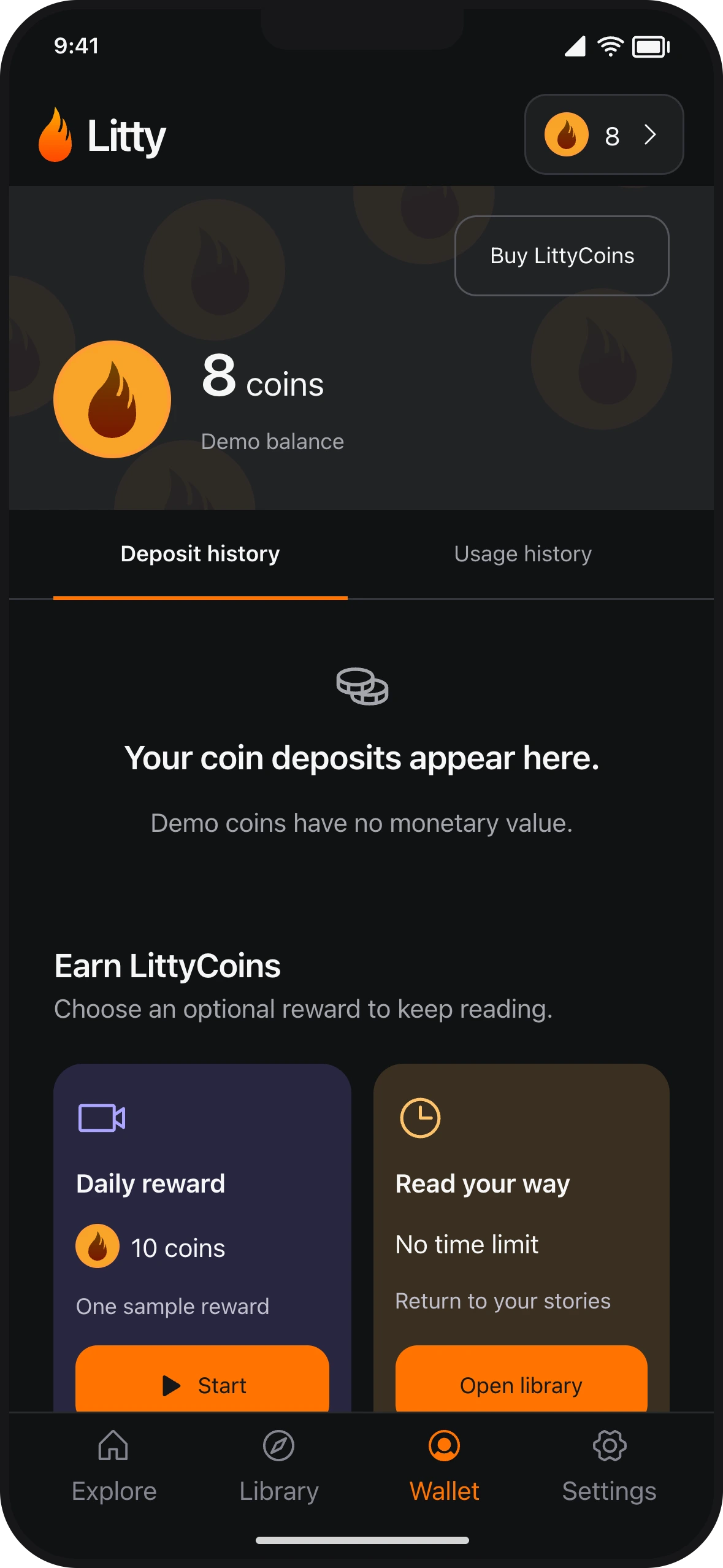
I modeled two phases: direct unlocks ($1 to support a creator, $3.99 for a story), followed by a wallet with daily refills, coin packs, and creator support. Piccoma's wait-or-pay model informed the approach5. Litty added optional Watch-to-Play video events to earn coins, with credit to the author for each unlock.
We considered a flat monthly subscription, but pooled revenue would weaken the link between a reader's purchase and an author's payment. We chose per-episode LittyCoins despite a slower revenue ramp. Creator contract terms also warranted care: South Korea's regulator identified 1,112 unfair clauses across 23 providers7.

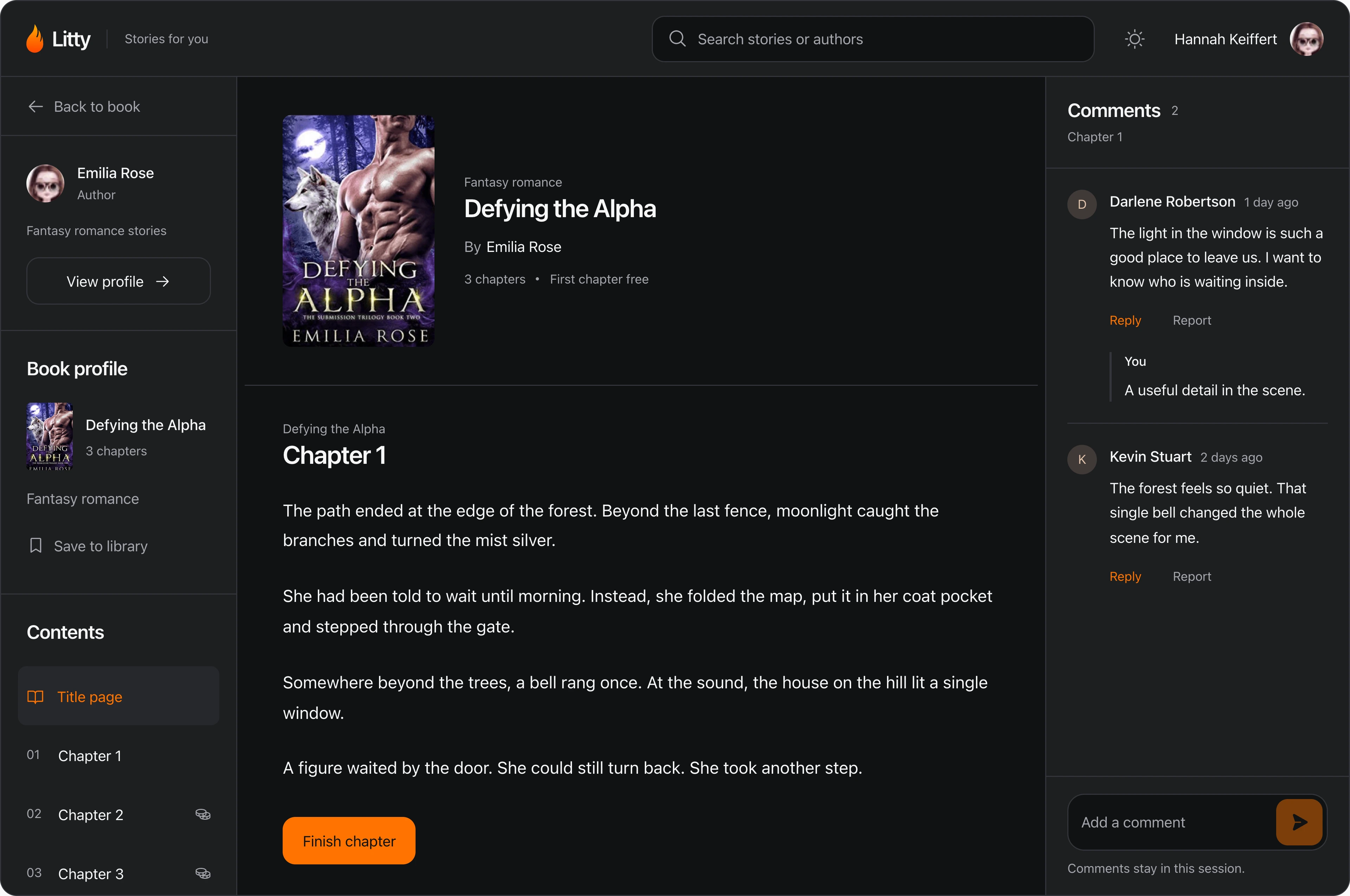
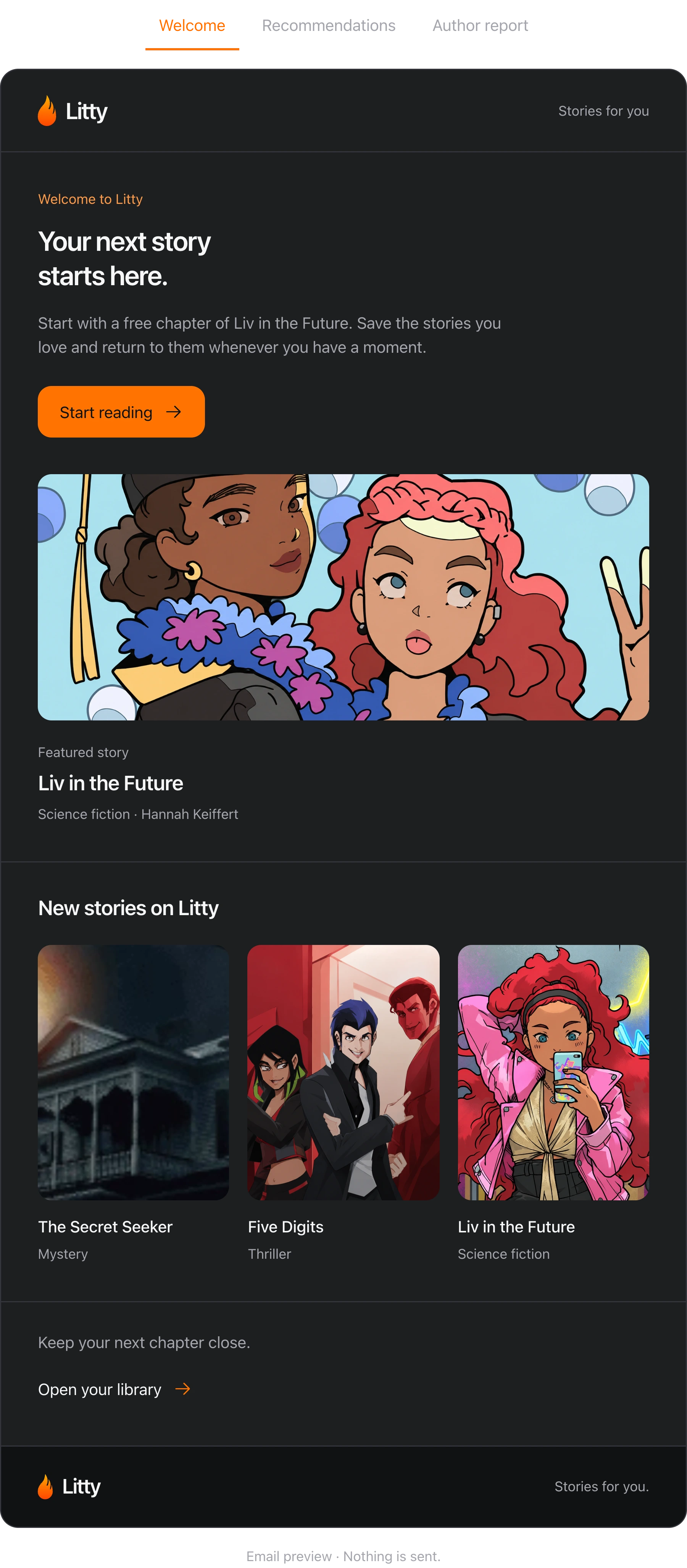
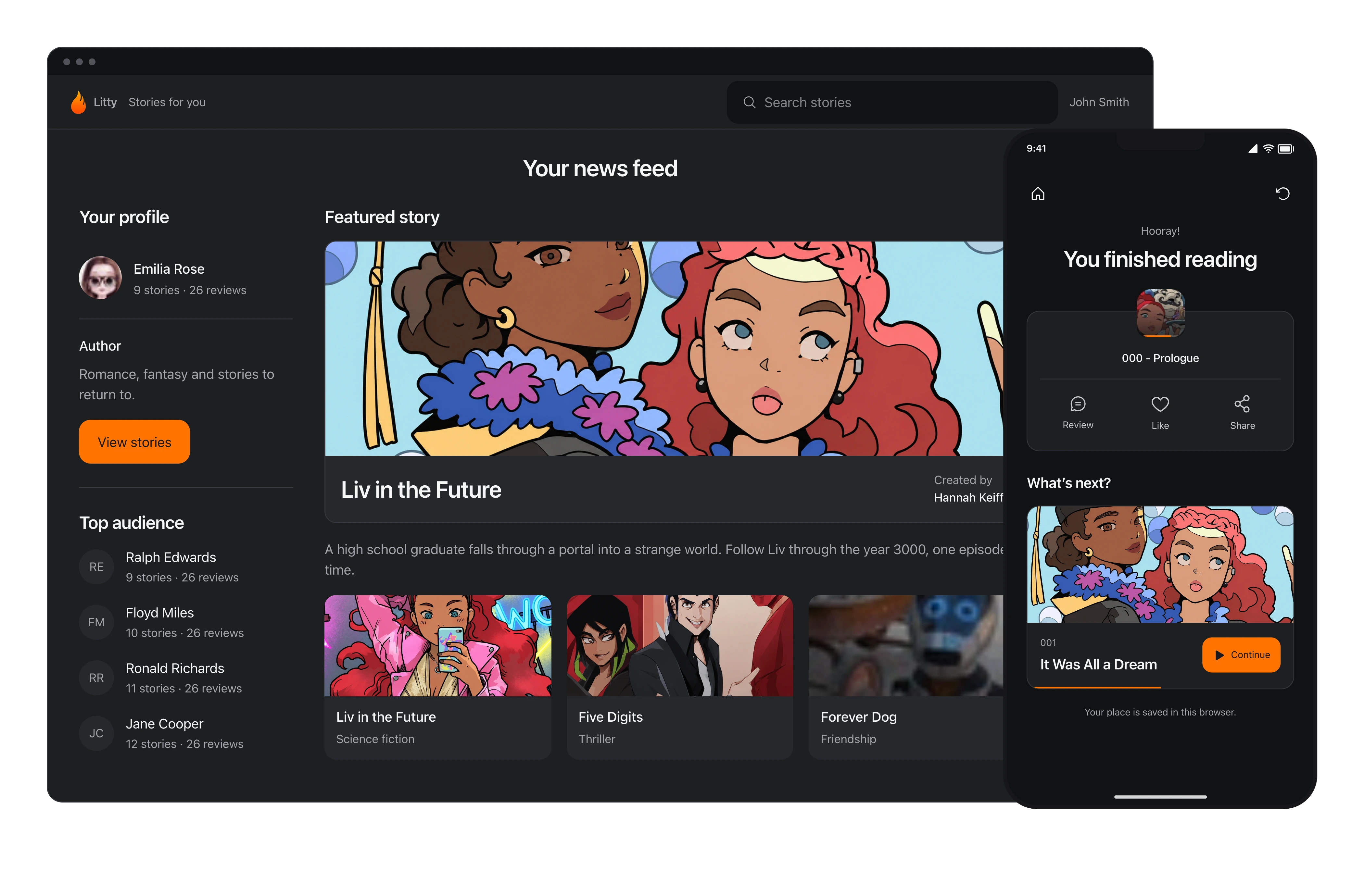
The app, web companion and email system
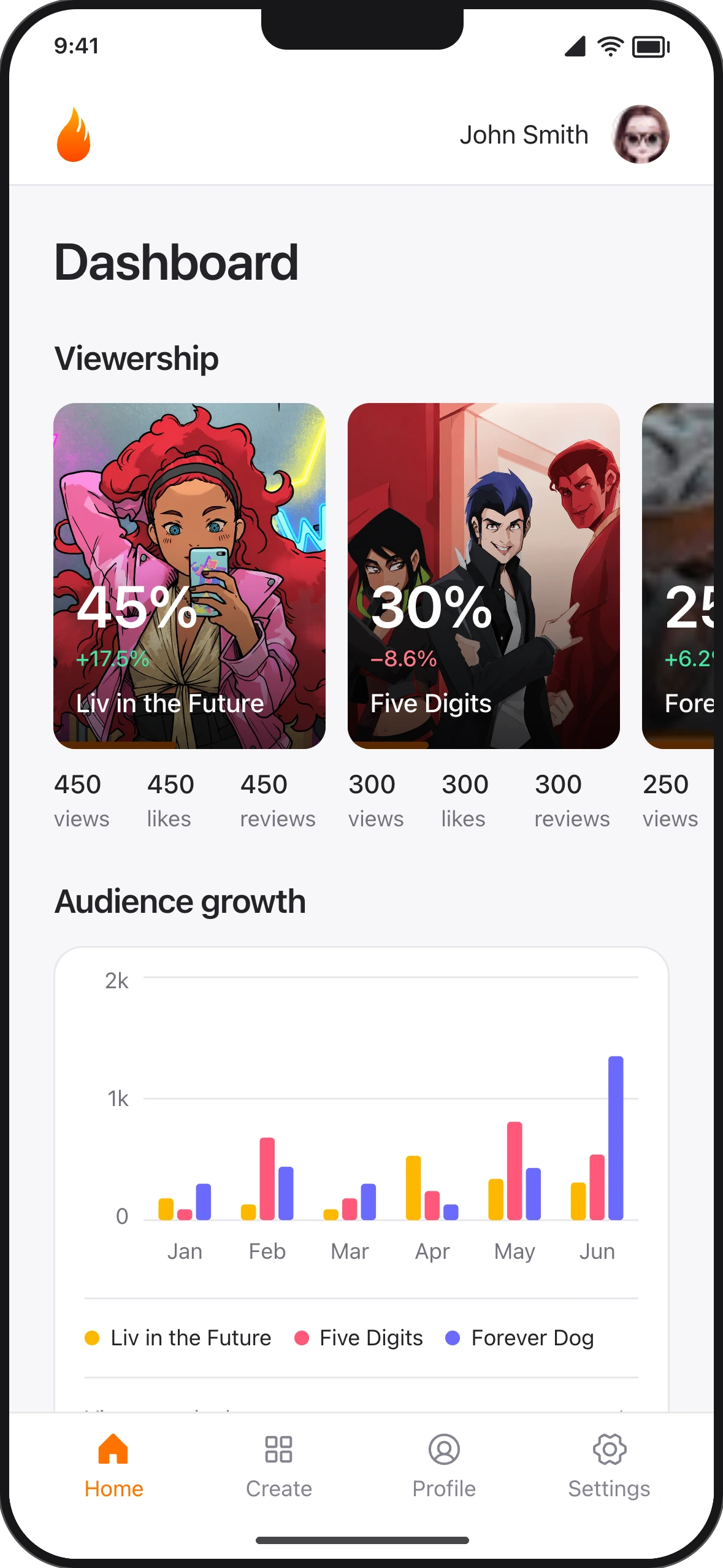
Reader and author flows extend to the web and lifecycle email, from onboarding and recommendations to weekly audience reports.
A shared system for reading and publishing


Launch and early engagement
Litty launched on the App Store with a Featured Editorial pick and on the Play Store. The launch listings showed 3.9 stars from 57 App Store ratings and 3.5 stars on Play Store.

Readers used narration frequently, but authors had to record in GarageBand and upload a file. Roughly two-thirds of new episodes lacked narration. I would test an in-app recorder to see whether it helps more authors publish audio.
Shipped with
Founder & PM
Author network, editorial taste, App Store relationships
Engineers ×3
iOS, Android, episode playback, payments
Illustrator
Brand world, motion language, in-episode art
App Store editorial partner
Launch positioning, category sequencing
Sources and notes
7 references- pewresearch.orgPew Research Center, Book Reading surveys.
- variety.comNaver acquired Wattpad (≈72M monthly users) for more than $600M, 2021.
- variety.comKakao Entertainment acquired Tapas and Radish for a combined ≈$950M (Radish ≈$440M), 2021.
- ir.webtoon.comWEBTOON Entertainment reported ≈170M monthly active users, 2024.
- inquivix.comKakao’s Piccoma popularized the “wait-or-pay” unlock and rode it to the top of Japan’s app consumer-spending charts, ahead of every game. Industry overview.
- NoteSelf-reported, first months post-launch vs. private text-only beta. Directional pre/post measurement, not a controlled study.
- animenewsnetwork.comSouth Korea’s Fair Trade Commission found 1,112 unfair provisions across 23 webtoon and web-novel providers, 2025.